Home again……by the numbers

At 7.15am this morning – Sunday 24 February 2013 – we arrived at Auckland International Airport on NZ1 from Los Angeles, after the last leg of a journey which began on Sunday 25 March 2012, 48 weeks previously. Today is Day 337.

We’ve travelled 114,433 kilometres (approximately!) and visited 55 different countries on 5 different continents. We’ve been on 32 flights, 17 ferries or ships, and uncounted numbers of buses, taxis, trains, metros, trams, gondolas. We’ve even ridden bikes……slowly.

Between us, we have taken 14,204 photographs – which is only about 42 per day. But if we have a slide show and only look at each picture for 10 seconds, it will still take 39 hours, 27 minutes and 20 seconds to watch the lot. Anyone keen??

Everyone always wants to know – what was your #1 favourite place? But you need to know, before you ask, that there is no definitive answer to that question for us because we loved every country we visited. They are all different and all have different attributes – mostly good, only a few bad. There are just far too many highlights to single any one place out, but over the coming weeks as a few more blog posts see the light of day, some other great memories will be no doubt be revealed. By the way, thank you all for reading the blog so far – it’s been fun bringing it to you over the past 11 months or so.

And this brief post was about numbers – amongst them there are two that especially stand out….1 and 2. For ONE absolutely fantastic travel experience and TWO very lucky people who enjoyed it thoroughly from start to finish…..

Oh, and about the favourite place? Alright then, if you insist, here it is:

MALAYSIAVIETNAMCAMBODIAINDIANEPALMAURITIUSSOUTHAFRICAZI
MBABWEZAMBIAKENYATANZANIAQATARTUNISIAMOROCCOENGLANDF
RANCEBELGIUMNETHERLANDSGERMANYDENMARKSWEDENNORWAYF
INLANDESTONIALATVIALITHUANIAPOLANDLUXEMBOURGSWITZERLAN
DAUSTRIALIECHTENSTEINITALYSANMARINOMONACOSPAINGIBRALTAR
PORTUGALANDORRACROATIABOSNIAANDHERZOGOVINASLOVENIAWAL
ESRUSSIAIRELANDNORTHERNIRELANDSCOTLANDICELANDUNITEDSTAT
ESOFAMERICAARUBACOLOMBIAPANAMACOSTARICANICARAGUAMEXICO

I is for Iceland….

….or “F” is for fascinating. Of course there are a few other adjectives that could be used: cold, expensive, volcanic, friendly, tree-less, dark to name a few. But after just a short stay there (3 days) we would probably settle for “interesting” because, for us, that sums Iceland up nicely. We enjoyed every minute of our stay there, and would certainly agree with the Immigration officer at Keflavik Airport who told us that 3 days simply wasn’t enough. However, he did stamp our passports and let us in….and the short Icelandic adventure began.

It actually began with a slight disappointment….we’d booked some excursions in advance, starting with a first night 3 hour outing, after dark, to a suitable spot away from the Reykjavik city lights, to hopefully see the Aurora Borealis or Northern Lights. By the time we reached our apartment in downtown Reykjavik, about 60km from the airport, that night’s trip had already been cancelled because of the 100% cloud cover…..and although we did manage to get out on the next night’s expedition instead, it was abandoned after about 2 hours because of the Lights just weren’t cooperating, then on the third night we didn’t even leave town, again because of cloud. So, sadly, one of the hoped for highlights of our stay never eventuated…but when it boils down, Mother Nature is in charge, not us!

A note on that initial trip in from the airport too….unsurprisingly, neither of us have ever been to Mars but when we do go there, we’ll recognise the Martian version of Iceland. It was just mile after mile of freezing cold starkness, with no sign of human habitation anywhere, and as barren a landscape as you could imagine. Maybe there’s places in Antarctica like this (Cousin Roger??) but if not, then we’re fairly sure that the Moon or Mars is the closest equivalent. Not an unpleasant outlook mind you, just an unexpected one. The almost total lack of houses shouldn’t really be a surprise though as there are only about 320,000 Icelanders for a start off and 93% of them live in urban areas….and nearly half of those in Reykjavik.

And while we’re on the population….did you know that everyone is in just the one phone book, and that they are listed under their first names? Iceland is the only country in the region to still use the traditional Scandinavian system of knowing everyone (even the PM) by their first names….but to reduce confusion a little bit, the person’s profession is also listed. Bjork the singer isn’t only known as that because its easier to fit on a CD label than her full name of Björk Guðmundsdóttir, but mainly because that’s how fellow Icelanders would greet her, whether they know her or not. And let’s digress a little further….Iceland does have surnames but doesn’t pass them on them like we do….so a family of four (Mum, Dad, son and daughter) will have four different surnames: let’s say a man named Jón Gunnarsson has a son named Eric. Eric’s last name will not be Gunnarsson like his father’s; he will be Eric Jónsson, because Eric is the son of Jón. And his daughter Sigríður would be Sigríður Jónsdóttir, as in “Jón’s daughter”. And Mum’s surname of course, is based on her father’s name! Confused??

Enough of that….back to the landscape. Its starkness and seemingly inhospitable vistas are also Iceland’s strong point – it is precisely this that makes it such an amazing place to visit. You sit in a warm comfortable bus (and here’s a plug for Reykjavik Excursions….their buses are world class) and look across mile after mile of snow, ice and lava rock, leading all the way to the mountains and glaciers on the horizon. It dawns on you that there is really nothing that’s not black or white in your view (any grass or scrub at this time of year is well covered in deep snow and there are almost no trees whatsoever – at one stage one of our guides pointed to two scraggly plants about a metre high perhaps and a few centimetres apart in the snow and only slightly tongue-in-cheek told us that we were looking at an Icelandic forest!). You step out of the bus and the minus 5 temperature with an additional wind chill factor of maybe another 5 or 10 degrees hits you immediately. But you don’t want to get right back on that bus – far from it – because the vista before you is simply stunning….it is so worth the discomfort of the cold to see what lies before you. It could be just that never-ending vista of black rock and white snow, it could be a boiling hot geyser such as at Strokkur erupting high into the icy cold air every few minutes, it could be the most amazing semi-frozen waterfall at Gullfoss, it could be warm sulphurous pools set amongst dark volcanic rock at the Blue Lagoon, or it could be the view, in the distance, of the currently calm volcano of Eyjafjallajökull….. everywhere you look that sense of endless nothingness soon transforms into a realisation that there’s a lot more to Iceland than first meets the eye.

Or it could be the Christmas card like street scenes in downtown Reykjavik – dark until around 10am when we were there, but they compensate with wonderfully warm, cosy looking lights in shop windows and floodlighting of all public buildings. If there’s one thing that Iceland is not short of, it’s power….they have electricity in abundance and extremely cheaply too. In 2011, Iceland produced 99.98% of its electricity from hydro or geothermal plants – the remaining 0.02% came from imported fuel oils and they aim to have eliminated this source altogether within the next few years. There’s so much power that they have huge glasshouse complexes growing a lot of their local vegetable needs all year round – we visited a tomato place where they can pick a few rows of the crop every single day of the year, because the banks and banks of lights which are on 14-16 hours a day keep things growing strongly, even when it’s 20 below outside.

There’s much more to say of course but to cut a potentially long story short – we thoroughly enjoyed our brief stay in Iceland and would visit again in a flash if we could. For a longer time though, and maybe in summer just to see the contrast! But first we need to win Lotto, as the one drawback is the enormous cost of everything….they are still struggling to recover from the well publicised financial meltdown a few years ago (Q: what’s the capital of Iceland? A: about 200 kronur!), and as a result, for example, even a simple budget lunch of soup and bread for two, plus a cake to share, will cost at least NZ$40-$50. And the supermarkets don’t have the Icelandic equivalent of “Save” anywhere in their names, that’s for sure!

If I can get them to upload properly, there’s a few photos here to give you a bit of an idea of what we saw. For now though, bless í bili as they say in Iceland….goodbye for now!

A trip around our dinner table

When I was a little boy, our family had two sets of placemats, well two that I remember anyway. There was one set only for “good”, which showed fairly dreary Old Masters paintings, and another “everyday” set which had a “Scenic Scotland” theme. [Incidentally, the latter set probably came from one of Mum’s Scots pen-friends who were really good value because they always sent us Christmas presents…..however, to save money they sent them by sea-mail, always waiting until about mid-December to do so. Thus, every year I scored an extra Christmas present….but sometime in March!]

The placemats in question are a bit of a distant memory now (my much wiser and very much older sister probably remembers them better) but I seem to recall scenes like Eilean Donan Castle, Loch Lomond, the Pass of Glencoe and the like. And, now, after a wonderful fortnight north of the border earlier this year, we have been to all those places and many more, and it would be nice to share a sampling of our experiences with you. So, please be seated, and prepare yourself for a dinner table tour of Scotland.

Entree
We started our time with a few days in a place which, to be fair, probably doesn’t feature on too many placemats. But it’s an under-rated place, perhaps not often visited by tourists which is their loss, very much loved by its “locals” and rightly so – I’m referring to Greenock, which lies on the left bank of the Clyde, downriver from Glasgow Anyway it may not be on the beaten track but it knows how to put on a good time – we were visiting our good friends Jeannie and Jonathan Clough (who have recently returned from their own year-long world tour which included the 2011 Rugby World Cup which is when we met them, and who are currently living in Greenock with Jeannie’s parents) – and the J’s took us first-footing in the very early hours of 2013. It’s a night we’ll never forget….in fact, it’s one we’ll always remember! How could you forget it being 8am on New Year’s morning before we got home, and with a traditional “Ne’er Day Dinner” of steak and trifle scheduled for 2pm, there was little time for luxuries like sleep. We met some wonderful people, had a fantastic time, and, yes, had one or two wee drams to celebrate Hogmanay!

Soup
Whilst we were with the J’s they took us on a couple of outings – one across on the ferry to Dunoon, and then through the misty back roads to a lovely little loch-side town called Inveraray, before returning after lunch via the Loch Lomond road. Then, a few days later, as the two of us set out on our own again, we stopped for lunch at Luss on the banks of Loch Lomond. The mist had cleared, the loch was clear and still, and the snow capped top of Ben Lomond rose on the far shore. Quite a magnificent scene.
The second trip with Jeannie and Jonathan was to Stirling Castle which was a great day out – full of history and tales from England and Scotland’s at-times rather testy historical relationship. Well, not so historical for some of course! On the way we visited what we think was the site of the Battle of Bannockburn, although it’s a bit hard to tell when they’ve closed (demolished, more like) the visitor centre for renovations. But at Stirling, they’ve finished all that, with the restored Great Hall, the Royal Chambers, even the original kitchens which are all magnificent. And there are so many stories of Royal intrigue and plotting to tell after the visit to the Castle, but sadly no space to include them here…

Main
Next was a drive through Glencoe then over the sea to Skye on the Mallaig-Armadale ferry which we had to reverse the camper-van onto down a steeply sloping ramp in the dark and the snow! So we were on Skye, but unfortunately we barely saw the sky. We stayed two nights at Breakish, and on the day inbetween took ourselves on a drive around much of the Isle to places like Portree and Uig. It was almost constantly raining throughout, but it was still a great day – Skye in mid-winter is still a place of magnificent scenery, where even the brown winter growth of heather across the hills is a sight to behold. We can only imagine how wonderful it must look when the heather is in full purple bloom. The day we left Skye, we stopped for lunch at Eilean Donan – again it was raining and quite bleak, but some sights are still well worth making the effort to see, even when the weather is against you.

Dessert
When we reached Loch Ness, it wasn’t raining! It was very foggy instead. That meant when we stopped at the most interesting historical ruins of Urquhart Castle beside the Loch, we couldn’t see more than about 20m out from the shore. So, was Nessie frolicking around on the surface just a few metres further out into the Loch, or not? We’ll never know – although after learning a great deal by visiting the Loch Ness Monster Visitor Centre in nearby Drumnadrochit, it would be fair to say that as all the great stories get debunked as hoaxes or myths, it is more and more apparent that Nessie sadly doesn’t exist. Buuuuuut – then again, are all those people who confidently saw “something” wrong? And I’m sure I heard something out there in the mist….

Cheeseboard
We spent a couple of days in a small but lovely town in the Cairngorms named Grantown-on-Spey (leaving there was like being in Southland as we crossed a heap of rivers that are also street names in Invercargill – Spey, Forth, Tay, Dee etc) before heading to Edinburgh for our final few nights in Scotland. We managed to cover some of the usual touristy things like Edinburgh Castle including the Scottish Crown Jewels and the Stone of Scone (now returned to its rightful home by those thieving English!) and Greyfriars Bobby (ironically there’s a “Dogs Not Allowed” sign at the entrance to the Greyfriars Church Cemetery!) but we also took in two relatively new attractions. Firstly the underground houses and streets of St Mary’s Close which is where thousands of people used to live cheek by jowl in the squalor and near-darkness under buildings which the Council built on top of their community, after simply slicing off the top couple of stories of every building, and using what was left as foundations….too bad about the residents who were living there. If you decided to stay in what was now effectively an underground tenement (and when you’re poorer than church mice leaving isn’t really a option) and if you were lucky enough to survive the plague and other nasty diseases, the best you could hope for would be to only be ankle deep in the contents of everyone’s toilets as they tipped them out their windows – it was a real case of the houses at the top of the hill being the “best in the street”. And then secondly, we spent an afternoon visiting the former Royal Yacht “Britannia”, now retired and moored permanently at the Leith Docks. It was the best thing – we really enjoyed our chance to wander all over the ship, and to get a understanding of what life was like aboard. The surprising thing was that whilst it was very well appointed of course, and probably as the shiniest engine room ever to have gone to sea, it was not the ostentatious monument to extravagance that might have been expected – it truly was a relatively simple home away from home for the Royal Family. And we learned a few fascinating “behind-the-scenes” tales – just one example: when the Sitting Room was being designed, the shipyard installed a electric wall heater rather than an open fire as the Queen had requested…..because Royal Navy regulations, that even the Commander-in-Chief can’t override, state that an Able Seaman must be present beside a fire at all times with a bucket of water in his hand. And as that may have stifled the Family’s chance for a casual private chat, an electric fire was put in instead.

Coffee
As always, there’s so much to write about but a wish to not outlast anyone’s attention span, so there’s no room to tell you about the battlefield at Culloden, about our gondola ride up Aonach Mor to (not) see Ben Nevis in the mist, about a great walk around the ruins of Elgin Cathedral followed by a quick drive to the seaside at Lossiemouth, about our exclusive tour of the historic Dallas Dhu Whisky distillery, or about our afternoon at the Old Course at the Royal & Ancient Golf Club at St Andrews, to name but a few other highlights of a fantastic fortnight in Scotland…..

So, if we were in the placemat business, the 2013 version of our Scenic Scotland placemats might include some of the scenes in the album you’ll find here – but which six to choose?? We’d have to have a huge dining table to include ALL our favourite spots in Scotland that’s for sure!

Now is the hour…..

This day had to come….sadly.

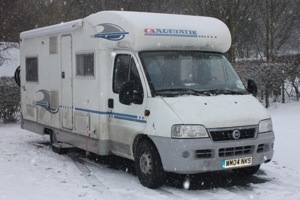
Today we said farewell to our camper-van, our home since Tuesday 12 June 2012 – that’s 227 days ago, or seven and a half months. There was almost a tear in our eyes for both of us – our 2004 Fiat Ducato/Adria Coral 650SP (rego WM04 NKS – how many times have we quoted that over the past few months….to camp receptionists, ferry boarding staff, border officials, and even one Latvian policeman??) has been a wonderful home away from home that we have just absolutely loved being in. We have had the odd little problem (nothing mechanical – it runs like a dream) and there’s been a few repairs necessary from time to time, but for 99.9% of the time, we’ve had a brilliant road trip around Europe and the UK. Now, for the remaining month of our travels – starting Saturday when we fly out of Heathrow on our way to Iceland – we will be back in the pack/unpack routine, suitcases in and out of hotel rooms (or a cabin on board the “Coral Princess” in the Caribbean for 2 weeks) and the security of taking our home with us pretty much everywhere we’ve been will be a thing of the past.
20130124-164323.jpg
So, to mark this momentous occasion, here’s a few statistics and if you can be bothered getting an atlas, here also is the path around Europe. If you don’t like stats and lists…..stop reading NOW!

Start: Faversham, Kent, England – 12 June 2012
Finish: Faversham, Kent, England – 24 January 2013 (our 26th wedding anniversary)
Days on the go: 227 (including 54 where we stayed put and didn’t clock up any travel in the van)
Mileage: 22,665 miles (36,491km)
Longest day’s travel: Hyllestad, Norway to near Berkåk, Norway (331 miles – 534km)
Shortest day’s travel: South Ockendon, Essex to Abbey Wood, London (25 miles – 40km)
Diesel purchased: 3995.17 litres at an average of NZ$2.45 per litre.
Fuel economy: 25.8 miles per gallon (I only think in the ‘old’ terms, sorry)
Fuel costs: cheapest NZ$1.87/litre in Andorra; dearest NZ$2.91/litre on the M25 south of London. Single most expensive fill 71.46 litres at Waterbeach on the A10 in Cambridgeshire, at the equivalent of $2.85/litre. Interestingly, if we’d somehow been able to buy all our fuel at Andorra prices, we’d be around NZ$2,300 better off. Grrrrrr…..
Accommodation nights: Campsites 151, Roadside/Aires 35, UK farm or pub stays 17, French Passions 10, in Russia 6, in friends’ homes 5, Ferries 2
Border Crossings by sea: Dover to Dunkirk, Helsingor to Helsingborg, Helsinki to Tallinn, Barcelona to Genoa, Bari to Dubrovnik, Calais to Folkestone (Euroshuttle), Fishguard to Rosslare, Belfast to Cairnryan (in total, adding a further 841 miles, or 1,355km to our travels)
Countries visited: 31 (plus Russia in the middle, but without the van) with at least one night’s stay in 27 of these. We had day visits only to Liechtenstein twice, Monaco twice, Gibraltar and Bosnia & Herzegovina…..on the other hand, we crossed the border into Germany 8 times, France and Austria 6 each, and Switzerland and England 5 times each, plus others 2, 3 or 4 times each, although in such cases not every visit involved an overnight stay…..which is what the following itinerary lists:

England 1 – Whitstable, Dymchurch
France 1 – Locon, Boiry-Notre-Dame
Belgium 1 – Nieuwpoort
The Netherlands – Amsterdam, Wilsum
Denmark – Tønder, Jelling, Copenhagen
Sweden 1 – Motala, Orebro, Stockholm, Arjang
Norway – Borgund, Risnes, Berkåk
Sweden 2 – Krokom, Sorsele, Luela
Finland – Rovaniemi, Oulu, Vaasa, Helsinki
Estonia – Tallinn
Latvia – Riga
Lithuania – Klaipeda
Poland – Warsaw, Katy Wroclaw
Germany 1 – Colditz, Georgenthal, Ediger
France 2 – Verdun, Paris, Boiry-Notre-Dame (Patricia joined us in Paris)
Belgium 2 – Bruxelles
Luxembourg – Dudelange
Germany 2 – Heidleberg
Austria 1 – Bregenz
Germany 3 – Dietringen, Oberammergau
Austria 2 – Salzburg
Italy 1 – Campiolo, Venice
San Marino – San Marino
Italy 2 – Florence, Siena, Rome, La Spezia
France 3 – Cagnes-sur-Mer, Figanieres, Gordes, Lachassagne, Sancerre, Paris (where Patricia left us), Carrouges, Arromanches, Bresles, Lisieux, Mont St Michel, Leimburel, Penthièvre, Asnieres le Giraud, Hendaye
Spain 1 – Pamplona, Aranda del Duero, Madrid, Santa Elena, Cabra, El Bosque, La Línea de la Concepción, El Rocío
Portugal – Lagos, Lisbon, Viana do Castelo
Spain 2 – Pedrouzo, Castrojeriz, Gavin
Andorra – Andorra la Vella
Spain 3 – Barcelona
Italy 3 – Milan (where we picked up Katrina and Bernard), Maggiore, Sestri Levante (Cinque Terre), Assisi, Montecassino, Bari
Croatia – Dubrovnik, Split, Karlovac
Slovenia – Ljubljana
Germany 4 – Berchtesgaden, Oberammergau
Switzerland – Meierskappel
France 4 – Neydens (Geneva – where Bernard left to fly home), Veynes, Nice, La Motte, Avignon, Millau, Montignac, Bracieux, Chartres, Paris (farewell to Katrina), Calais
England 2 – Abbey Wood (London), Sandringham, Bicester, South Ockendon, Abbey Wood, Salisbury, Truro, Bridestowe, Glastonbury
Wales 1 – Newport, Cowbridge, Lawrenny, Tywyn, Betsw-y-Coed
England 3 – Liverpool, Whichford, South Ockendon, Abbey Wood
Wales 2 – Newport
Ireland – Wexford, Dungarven, Clogheen, Caherdaniel, Terryglass, Cong, Dublin
Northern Ireland – Cookstown, Bushmills, Belfast
Scotland – Greenock, Onich, Skye, Drumnadrochit (Loch Ness), Grantown-on-Spey, Edinburgh
England 4 – South Shields, York, Northampton, Kingsclere, Brighton, Abbey Wood

[And, yes, we’re aware that England, Wales, Scotland and Northern Ireland are technically one country, but for this exercise, touristic licence has been applied]
From Russia….with changes

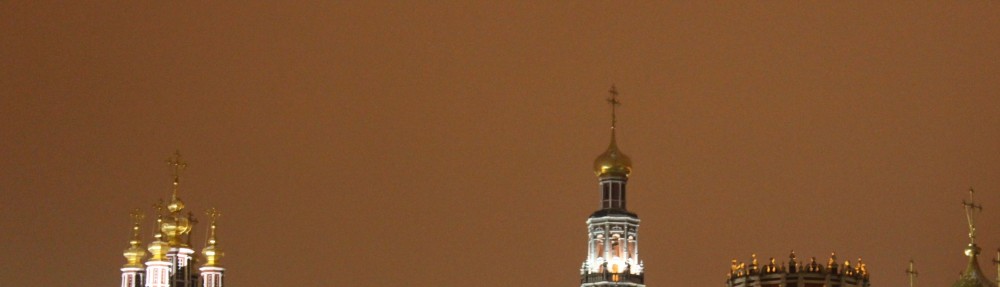
It’s now a month since we returned from a very busy 6 days in St Petersburg and Moscow, so a blog post on the subject is long overdue. At first the writer’s block was simply physical, as I was just a teeny bit delicate after the aptly named On The Go Tour Company’s “Vodka Shot” tour, but then lethargy and Christmas/New Year got in the way! It’s hard to encapsulate the whirlwind six days into a few paragraphs because we had such a great time – our little group of 7, including our guide, managed to fit in all the iconic sights in the two cities, plus an overnight train ride between them as well.

As you know, I’m not big on the minute by minute travelogue format for blog posts but hey, just this once….here’s a quick summary of our itinerary followed by an attempt to draw a few comparisons with the last time I was in Leningrad and Moscow, in 1980, when they were of course in the USSR.

The Itinerary….
Day 1 – arrive by air in St Petersburg (in about 4 feet of snow by the way). Late dinner and a couple of vodkas, in bed by 3am.
Day 2 – City Tour including St Isaac’s Cathedral, The Hermitage Winter Palace, Nevsky Prospect, and the Bronze Horseman. In the evening, a night at the ballet “Raymonda” in the Mariinsky Theatre. Dinner afterwards, in bed by 1am.
Day 3 – the Peter & Paul Fortress, The Church on Spilled Blood, then a self guided walking tour including the Admiralty, and the palace where Rasputin was finally killed. Back to the hotel for dinner, then to the station for the 0040 departure to Moscow. In bed, in the open sleeper “cabins”, by about 2am.
Day 4 – in Moscow at 0953, off to our hotel for breakfast, then by Metro into the city for a walking tour including Red Square, St Basil’s Cathedral, GUM, Bunker 42. In the evening a Moscow By Night bus tour complete with vodka shots concluding with midnight in a very cold Red Square before back to our hotel for a nightcap or two, then bed by 3am.
Day 5 – tour of the Metro stations (which could double for Art Galleries), then a tour of the Kremlin in the snow. Farewell dinner and drinks at night, bed by 4am.
Day 6 – visit to the souvenir market, transfer to airport, home to London, then after tube, train and bus trip back to our camp, bed by 10.30pm (which is 2.30am Moscow time!).

The Changes??
Names: the most obvious change was simply where we were for the first three days…..St Petersburg. It was Leningrad when I first visited, so that’s two names for one place but I’m sure there was someone out there who could have visited 4 times last century, to the same place but with a changed name each time: St Petersburg until 1914, Petrograd until 1921, Leningrad until 1991, then St Petersburg again. To the locals, it’s simply Санкт-Петербург (as you knew…)

Temperature: it’s much much colder these days….but to be fair, I did visit the USSR in mid-summer and came back to Russia in mid-winter, which makes quite a difference! To stand in a couple of feet of snow beside the almost frozen-solid Neva River in St Petersburg, as perfectly symmetrical snowflakes fall from a leaden sky onto your outstretched (gloved) hands, and to know that the temperature has already passed the expected low for the day of -8 degrees is quite something. Then to go to -11 at midnight in Red Square in Moscow, which in the 10 days or so after we left got down to -26 (and that’s a daytime reading too, not overnight!), is something else again. Carting our bags which seemed unnecessarily laden down with winter clothes in the +35 degrees heat of SE Asia and Africa all became worthwhile, when we donned hats, coats, scarves, gloves, thermals, additional jerseys, thermal socks, boots etc., just to survive outside!

Daylight: in a similar vein to the previous paragraph I suppose, but the point needs to be noted….the days were so short! In complete contrast to my previous summer visit, and also to the White Nights we enjoyed in Scandinavia just a few months ago, the sunrise (if it could be seen at all behind the snow clouds) was around 10.30am, and before 4.00pm, night had come again. Imagine coming downstairs in your hotel at 10.00am, having skipped breakfast and not having bothered yet to look out the window, stepping outside to the tour van, only to find yourself on the icy footpath in pitch black darkness!!

Shopping: in 1980, there were lengthy queues for everything from bread to cars. (If you were privileged enough to be ordering a car, by the way, you didn’t enquire what day it might be delivered, nor even what month…..but what year in the future it might turn up was a pretty important thing to know! Especially if that was the year you’d booked the plumber to come and fix your toilet!). But no matter what the people wanted it was invariably in short supply….and queuing was just a way of life. And then there was GUM – a huge store on Red Square, right across from the Kremlin. A department store really, and one which I’ve spent the last 32 years referring to as “gum” (as in chewing) whereas our lovely Russian guide Natasha Romanov (no relation to the Tzar apparently) now tells me it’s pronounced “goom”! Anyway….what’s different about it? Absolutely everything!
~ In 1980, the GUM shopping process went like this: you saw what you wanted in the small display windows on the outside…..you went inside to the ground floor which was, I’m sure I recall, the only floor open to the public and found a counter in the right department….you described the item to a clerk who filled out a handwritten docket in triplicate, keeping one copy and giving you two….you then eventually found a payment counter at which to hand your dockets over, along with your money (cash only) and that clerk receipted the payment, and returned one copy of the docket to you….you then searched for yet another counter where you handed over your receipt and waited an age while the third clerk went out the back somewhere and eventually came back with an item. Not necessarily the exact item you’d ordered, but one that was close enough for you to accept rather than argue the toss and spend another half a day in queues…..
~ In 2012, GUM has been completely transformed. If there was any doubt that Russia has embraced capitalism, then this place blows that all away. The same silly little display windows still exist but today they have everything from Apple to Zara on show, as well as all the labels in between. And inside it’s an ultra-modern retail mall with every outlet known to woman, plus quite a lot that were new discoveries, and all 3 (or was it 4?) levels jam packed when we were there with Christmas shoppers flashing their platinum cards, jostling for attention and searching for non-existent bargains in an extremely costly environment. It’s as far from the bad old days as you can possibly imagine.

Souvenirs: for most of the 20th Century, the most popular souvenirs on sale were fur hats (no change there), vodka (ditto), wooden toys (still going strong), and Babushka or Matryoshka wooden stacking dolls. Nothing much has changed although I did notice a lot more Hammer and Sickle type cap badges now seem to be on sale, as well as previously unimaginable things like clocks made from the instruments out of mothballed MIG fighter planes, and the stacking dolls are no longer restricted to the standard Russian peasant girl design. There are heaps of different designs now but my favourite, and there’s a set in my box of things to come home, is the Lenin doll, inside which is Stalin, then Yeltsin, then a tiny Medvedev, and then an even tinier Putin! Just appealed to my sense of humour….especially the bit where mighty Mr Putin is reduced almost to insignificance.

Lenin’s Tomb: in the old USSR, they had Lenin floating round in formaldehyde in the depths of a granite tomb on Red Square. In the new Russia, they have Lenin floating round in formaldehyde in the depths of a granite tomb on Red Square. In 1980, I didn’t see him because I couldn’t be bothered joining a queue that was hundreds of metres long….and in 2012, I didn’t see him because, believe it or not, the place is closed for refurbishment until April! I’m not 100% sure whether they are refurbishing the mausoleum, or Lenin himself.
But credit where it’s due – Lenin has survived (so to speak) many other leaders of his country. There are still statues, mosaics, friezes, paintings and so on of him everywhere, most notably in the amazingly grandiose Metro stations in Moscow, but there are none whatsoever of the likes of Stalin, Khrushchev or Brezhnev nor, as far as I could tell, of any of the more recent leaders from Andropov and Gorbachev onwards.

Secret Bunkers: we spent a most interesting afternoon about 70 metres below street level in Bunker 42, one of the Soviet Union’s then-secret Cold War locations where hundreds of personnel could stay for weeks on end if necessary, to hopefully ride out a nuclear attack, whilst launching their own on the USA. There were a lot of similarities to our KGB Hotel tour in Estonia back in July (except for the obvious one that the KGB Hotel was 23 floors above ground….the bunker is about the same number of floors below the ground, under what are just normal houses and apartments whose occupants, had they dared to ask what was going on when the bunker was being built, would have been told it was tunnelling for the Metro). The best thing is the Russian ability to laugh at themselves and have a little bit of fun with what is otherwise a hugely interesting, but deadly serious topic. I mean, that was just a fake scenario when I was volunteered to push the launch button on some ICBMs pointed at Washington DC! It was, wasn’t it?? And the comparison with 1980? Very simple – back then, secret bunkers were exactly that….secret!

I’m sue that’s enough for now! Hopefully you’ve enjoyed a few snippets of life in Russia today – if you ever get the chance, and can be bothered wading through the red tape that surrounds the visa application process (that is definitely one thing that certainly hasn’t changed!), then go for it. You won’t regret it!!

There’s a few photos to be found here if you’re interested….

Bureaucrats and Gas Bottles

Let’s start with three stories from the Boxing Day edition of the “Daily Mail”, the first recapping some news from 2012 that made them proud to be British…..a couple from Surrey spent their spare weekends getting rid of weeds, broken bottles, scrap metal and other rubbish that had been dumped on a overgrown grass verge outside their home. Their local council ordered them to either pay £78 for a retrospective licence for the work, or return the verge to its original state. In current news, there’s a report that traffic wardens in the Gwynned Council area of North Wales have been issued with tape measures in order to issue £70 parking tickets to drivers who park more than 19 inches from the kerb. And on another page, the paper reports that the EU, in its latest foray into mind-bogglingly tedious bureaucratic nit-picking, has decreed that plastic toy footballs – the brightly coloured ones that kids kick around at the park – now have to carry a health and safety warning as they are apparently a choking hazard for the under-threes. No one, however, can explain how a child might choke on a ball that is bigger than their own head!

Well, here’s a suggestion to the mindless officials in the Ministry of Interference in Brussels…. instead of legislating the size of the hole in a toilet seat, or decreeing that malt vinegar must be white not brown, or that pints shall no longer actually be pints (these are not made up – they all happened), why don’t you tackle LPG gas cylinders instead? It would be a fantastic advance towards world peace, harmony and equality, almost as good as giving women the vote or abolishing slavery, if you could just do something sensible and constructive about LPG standards, so that people in camper-vans travelling all over Europe and the UK can actually run out of gas and not then have to embark on a tour of the entire country they are in at the time to find (a) the right gas, (b) in the right size bottle, and (c) with the right size valve in order to actually use the gas from the bottle. That’s not asking too much, is it??

As you can possibly tell, filling our gas bottles has not been an easy task in this part of the world – it’s certainly not like New Zealand where you take your bottle to Rockgas or whoever and they fill it up on the spot. Or at very least, exchange a standard size/standard fitting empty bottle for a standard size/standard fitting full bottle. Not here!
:: In Finland, they only have Finnish bottles which are great because the valve fits a UK hose no problem, but no other country in Europe, including the UK, will exchange the Finnish bottle. And what’s more, Finland wins the award for the dearest gas in civilisation, at around €115 for the bottle and the gas.
:: In Germany, they exchange “European” bottles but won’t take UK ones, and you need an adapter to use their bottles and Dutch ones anyway.
:: In the UK, they exchange UK bottles but won’t take European ones. Nor will they exchange, even at Calor outlets which is possibly the leading gas brand in Britain and Ireland, an empty Irish Calor bottle for a full UK Calor bottle. A full new bottle without an exchange but including gas is £67 (€82)
:: In return, an empty UK Calor bottle is worthless at an Irish Calor dealer. But a full new Irish bottle can be purchased for €68.
:: In France, you can get a silver French bottle but not an orange Spanish one. Including the gas, it will set you back €39.
:: In Spain, they will fill your bottle (if you have a “filling adapter” that’s legal in Spain but nowhere else probably) or they will exchange bottles. That is, you can exchange orange Spanish gas bottles but you can’t exchange silver French ones, even although France may be as close as only a kilometre away. But if you do get an orange Spanish bottle you can use an “emptying adapter” that’s legal in the UK but not in Spain to fit the orange bottle to the hose in your van. The orange bottle including the gas is just over €30.
:: In Croatia, if it’s not completely impossible, it is very close to it, that you cannot fill, exchange, buy or sell a gas bottle anywhere.
:: Andorra is the best of the lot. Not only is their petrol and diesel the cheapest by far in Europe, but they readily exchange almost all gas bottles, and only charge about €20! (And the lady – I use the term loosely – carries the full bottle to the van for you!)

Confused? You should be! There are plenty more examples, but as you can see, when you think the gas is getting low, you’d better hope that you’re in the right place to do a simple swap of an empty or near-empty bottle for a nice new full one. If not, be ready for extra costs and extra time….it won’t be easy!

On the up side, if anyone is keen on collecting used empty LPG bottles, you’ll find a blue UK bottle and a Finnish bottle down the side of a Repsol service station in Pamplona in Spain, an orange Spanish bottle hidden behind a recycling bin at the side of the road in Provence, another blue UK bottle at the hardware shop in Rathcoole near Dublin, and a silver European bottle in the storage area of the campsite at Abbey Wood, London. They’re all yours…..

Enough gas about gas! But to return briefly to the way the Eurocrats spend their otherwise unproductive days in the office….what’s the bet the EU joins the fray in Gwynned over the parking rules and decrees that in fact tickets may not be issued when cars are parked more than 19 inches from the kerb, but must instead only be issued in cases where the offending distance is more than 48.26cm?? (There’s 2.54cm to the inch – you do the maths!)

Merry Christmas everyone

….’tis the week before Christmas, and that means it is time to send you all our very best wishes for both a blessed Christmas Day with friends and family, and for a wonderful New Year.

Right now, we are in a small village called Cong, on the border of County Galway and County Mayo in the west of Ireland as we continue our travels around the Emerald Isle. By Christmas Day, we will be in Dublin where we were to have met up with Pauline’s cousins but as we’ve been let down in that department we will be organising our own Christmas Day celebrations instead. Exactly what that entails, we’re not sure yet, but there will be a nice Christmas dinner somewhere, a few presents under our little tree, a visit to a church, and maybe a festive Guinness or two (somewhere else, presumably!)

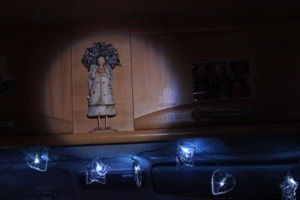
Yes, we do have a tree – many months ago when we visited the Santa Claus Village near the Arctic Circle in Finland, we bought a tree made of felt, about 24cm high, which sits nicely on our camper-van table. Except when we’re driving of course, when it sits on the bed until we get to our destination for the night. And when we were at Glastonbury Abbey last month, we acquired a really nice nativity set which sits alongside the tree, under the “NOEL” hanging on the curtain above. Topping off the festive scene inside the van, we have a set of lights above the cab and surrounding our guardian angel Eva, who was given to us in July by our friend Eva in Finland and who has looked after us ever since…..all very Christmassy and our way of easing the fact we will be enjoying Christmas on our own this year.
20121220-141333.jpg
But we won’t be entirely alone…..there will be phone calls of course – one of the great discoveries of our European touring has been the Lycamobile SIM card which gives us excellent call rates back to New Zealand. So Telecom might be shouting you all free calls on Christmas Day at home, but we’re not far behind at €0.01 per minute!

After Christmas, we head to Northern Ireland for a few days, then over to Scotland for Hogmanay and then a week or two touring around in the snow and ice of the Highlands. Then, all too soon in some ways and not soon enough in others, we’ll be heading south again to drop off the van and go to the airport to start the homeward journey on 26 January. We’re taking our time though – a few days in Iceland, then stops in New York and Washington, before we take a wee boat ride from Miami to Los Angeles via the Panama Canal. Finally, a flight home on NZ1… arrival date back in Auckland is 24 February and suddenly, the travels will be all over!
20121220-141318.jpg

<a
But before then, you have some more blogging to put up with…..in the melting pot at the moment are stories on Ireland and of course a few thoughts on our very intense week in Russia. But that one is a story that's taking a while to develop as one of us still has a bit of a sore head from all the celebrating that went on!

Speaking of celebrating – that's what Christmas is all about, so please all have a great day on Tuesday, celebrate well but wisely, and remember the reason for the season.

God bless you all

Love from The Adventure Before Dementia team……..

Travelling the Seven C’s….from Cornwall to the Cavern Club

We need to tell you about what we’ve been up to lately, but there’s been so many really interesting times that it’s hard to know where to start. So here’s a trip through Seven C’s…..Cornwall, Cheese, Church, Cardiff, Coal, Caernarfon, and the Cavern Club. Ok, so that’s 8 C’s, but one is a double banger….

About two weeks ago, we made it as far as Truro in Cornwall, and from there we made trips to Penzance and to Land’s End. The latter was on a bitterly cold, wet, windy day with a gale blowing icy sideways rain onto the cliffs by the famous signpost (which you can’t stand beside without handing over £5, so naturally we didn’t!) and the place almost deserted as you should probably expect in November. But despite the weather that day, we really loved Cornwall – it has some wonderful scenery, with cliffs overlooking picturesque seaside fishing villages one way, rolling farmlands enclosed within miles of stone fences the other. And speaking of fishing villages, we made the trip to Port Isaac which many of you will know better as Portwen, where the “Doc Martin” series with Martin Clunes is filmed. It is EXACTLY like it is on TV…..we had no problem finding the boat ramp, the school, the restaurant, and the ‘surgery’, and would not have been at all surprised to see the Doc himself striding down the hill in a bad mood as usual. A lovely little village with some very friendly locals to chat to (“ooo, yes, I ‘ad Marrrrrtin in my house just last summer, I did – a lovely man he is too…..”) but sad to learn that only 12 original residents remain down in the harbourside part, as most of the cottages there have been snapped up at exorbitant prices by Londoners who only visit for a few days each summer. Sad in the sense that the heart of a village is its people and they’ve all moved up to the modern houses on the hill that you don’t see on the TV, but good on them for spying the city people with their fat wallets and even fatter egos (“of course, Rupert and I have a little place in Cornwall, you know, that we motor down to every Bank holiday…..”) and making a poultice of money out of them.

A couple of days later, we stayed just out of the floods that affected the West Country quite badly, and visited Cheddar and Glastonbury in Somerset. Cheddar was the first place we’ve ever seen workmen building up sandbags to keep the rising river out of the High Street, and also the first place we’ve seen the actual cheese making process happening in front of us. Past yer eyes, you might say! The Cheddar Gorge Cheese Company (“the only Cheddar made in Cheddar”) is a small company but does the cheese making thing really well, and also does the tourist bit really well too. Not only was it probably the least expensive payment we’ve had to make (£1.95) for a tour, but it was one of the most informative and interesting as well…..and as we were watching the video, through the glass behind the TV, the cheese-maker was actually doing the work…..using traditional time honoured ways of separating the curds from the whey, of folding the cheese as it hardens, of pressing it, of waxing it and so on. And then the tasting to follow was an excellent follow up – well worth the time taken to visit.

After lunch, we went a little further on, to Glastonbury to see the ruins of the Abbey. It was once the biggest Church in England, and arguably the richest as well, until Henry VIII went berserk. Well, actually, maybe not Henry…..the young man who took our money at the Abbey (£5 from memory…..the Anglicans are better at making a dollar than the cheese makers are, that’s for sure) was obviously a history scholar, and gave us some really good insights into the story. At the risk of upsetting any English History buffs amongst the readers of this blog by getting the story wrong, the gist of it was that England was fighting some pretty expensive wars and Henry’s advisers came up with the idea of plundering all the churches around the country, to fill their war-chests. And that’s what was really behind the fact that places like Glastonbury Abbey were stripped of riches and power and left to go to ruin – and here we thought that dear old Henry had done it just so he could get a divorce. As a result of the plundering then, and the centuries since of the locals using the stones as building materials for their own houses (most of Glastonbury is built out of second hand Abbey) the Abbey itself which must have once been such an amazing sight to behold, is now just a few walls and a step or two of the original tile flooring, all amongst perfectly manicured lawns. But it does have a thorn tree that supposedly sprouted from the staff of Joseph of Arimathea when he visited about 1900 years ago (Glastonbury claims to have the longest continuous Christian church establishment in England), it does have the grave where King Arthur is supposedly buried, and it does have (actually not supposedly) a really interesting and well planned museum.

Then onto a religion of a completely different kind – across the Severn Bridge to Wales, and the rugby test in Cardiff. Again, it was raining (oh boy, was it ever) so the short walks from the Prince of Wales pub to the Millennium Stadium before the game, and the short walk back afterwards, and then about midnight, the very long walk from the bus stop to our camp, left us both quite wet and ensured the van still looked like a Chinese laundry nearly a week later! But the inside of the pub was warm and convivial as we enjoyed the company of other Kiwis and of the many Welsh people who were hoping against the odds that THIS would be their year, and the inside of the Stadium was of course dry with the roof firmly closed. And what an atmosphere! It wasn’t Cardiff Arms Park, that’s true, but what the Welsh lacked in firepower on the pitch that day they certainly made up for in the other aspects – the choirs (leading 70,000 or so people one minute in “Men of Harlech” and in Tom Jones’ “Delilah” the next), the anthems, the regimental goat on parade (see later for more details), the fireworks, and the pies which were very, very good. Oh, and Wills and Kate were there too – we have the photos to prove it!

The next day did start a little more slowly than normal, but we had been obliged to celebrate the win of course (by the way, a week later we sat, the only two Kiwis amongst about 100 good naturedly biased Poms, in a pub called The White Bear – where NZ cricketer Lou Vincent used to pull pints – in Shipston-On-Stour in the Cotswolds, and watched a very different All Black performance altogether….the celebrations weren’t quite so long-lived THAT night!). Anyway, back in Wales, we travelled up one of the valleys past Pontypool to a place called Pwll Mawr near Blaenavon. Pwll Mawr is Welsh for Big Pit, and this is the name of one the hundreds of coal mines in Wales that have long since closed, this one in 1980, but in this case it has reopened as the National Coal Museum. In a week of going to a number of excellent museums, this one was a high amongst the highs – the displays of the buildings (like the miners’ bathhouse) and of the history were truly brilliant, but the best part of all was to actually go down the mine, maybe about 500 feet or so. This is no sanitised tourist version either – this is exactly as it was prior to 1980, with us wearing miner’s lamps and oxygen emergency kits, with the seams of coal still exposed, with water running down the walls, and with the coal trucks and mining gear still in place in some tunnels. The guide was an ex-miner who’d worked in Pwll Mawr from the age of 15 until it closed, and who told a really good story. We learned so much – like the fact that pit ponies didn’t go down the mine until they were 4 years old, but then stayed down there without any visits to above ground, until they were “retired” at 13, and put out to pasture, usually blind and ready to die anyway; and we also learned that when you’re down a coal mine and everyone turns off their lamp at once, it is the darkest dark you can imagine – there is NO light way down there. And incidentally, we also learned in the museum that coal mining is not only a dangerous game but it is at its most dangerous when profits come before safety…..I wonder where we’ve heard that lately in NZ??

Where next? Up the west coast of Wales to the lovely town of Caernarfon (or Caernavon as we usually say it) where we enjoyed a fantastic frosty but sunny day as we explored the magnificent ruined Castle (built in 1283 by Edward 1 and most famous in more recent times as the scene of Prince Charles’ investiture as Prince of Wales in 1969). We found the place to be notable for three reasons: firstly just how nice it seems on the sunny side of the Castle, but how bitterly cold it was in the shaded parts; secondly how un-PC it was Health & Safety wise therefore a real pleasure to be able to go almost anywhere in the towers and battlements without barriers and “no entry” signs everywhere; and thirdly (here’s the museum bit!), what a great exhibition inside the Castle covering the history and folklore of the Welch Fusiliers Regiment. And yes it is “Welch” not “Welsh”. They’ve been in battles and have fought with distinction all over the world, from Blenheim in the 16th Century, to Afghanistan in the 21st. And it’s their regimental goat, always a billy, and always gifted to them from the Monarch’s personal herds, who is paraded at the Millennium Stadium before all the Welsh rugby tests.

And on to number 7 – after a day or two in the Snowdonia area of Wales, we headed back into England and spent a day last week in Liverpool. What a great place to visit! The day was again clear and sunny, albeit cold, but we managed to get our way around to see so much….we went to places like the Albert Docks which were once part of the nearly 8 miles of wharves and warehouses, but are now all renovated and turned into restaurants and apartments (which used to be called flats, as our brilliant guide on our city tour pointed out, until Liverpool was the European Capital of Culture in 2008 and everything changed!). The city tour was in a “Duck”, a WW2 surplus amphibious vehicle which took us around the streets of the central city and then down a ramp into the waters of the docks as well….lots of fun and a somewhat quirky view of Liverpool. We ate a meal at the Crown Hotel then stayed on for the regular Friday night Comedy Club with five very funny stand up comedians, after we ventured, briefly, down the stairs into the Cavern Club which is of course where the Beatles had their first ever gig. We also went to the Maritime Museum where they have some excellent material on the Titanic (registered in Liverpool, but never actually visited there) and we had a ride on a Ferry ‘Cross The Mersey before getting a bus back through the Mersey Tunnel. We walked around and saw the incredible mixture of architecture from the old (like the Liver Building, the Cunard Line Head Office, and the White Star Line Head Office….White Star were the owners of the Titanic) to the new (such as the Catholic Cathedral which resembles a giant tent and is known locally as either Daddy’s Wigwam, or the Mersey Funnel). Another modern piece of architecture that we visited was a huge shopping mall known as Liverpool One – the best shop in there was the one opened by Everton FC to sell their shirts and other paraphernalia – and their outstanding marketing people called the shop Everton Two. Think about it…..

So that’s it for now….a Seven C’s trip. We hope you enjoyed it…..there is a small selection of photos to be seenhere

Two Banks in Europe

We’ve only told you snippets of the time we spent last month with Katrina and Bernard (i.e.”Two Banks” in case you thought this was about financial institutions)….back in August, Patricia got a whole blog post of her own after our four weeks together, so it’s only fair that our next visitors should have their 15 minutes of blog-fame as well. We had a fantastic time together and found that four people in a camper-van does work remarkably well…..everyone pitched in and got things done, and we all thoroughly enjoyed nearly three weeks with them both then another two weeks with just Katrina, after Bernard headed home for work as planned. In case you weren’t aware, this part of the trip was to mark the 50 years of friendship for Pauline and Katrina – an anniversary we’d been planning for, for a number of years.

In total, we managed to squeeze in visits to ten countries and covered a total of 5,798km in almost five weeks. [By the way, as of the day this blog entry is being written, we have now completed 30,051km since first setting off in our camper-van 23 weeks ago.] So, here’s a quick summary and a few highlights…..(K & B, please feel free to comment in order to add all the important things I’ve completely forgotten to mention!)

After picking our visitors up at 6.15am from Milan Airport in Italy, we headed a short distance north to a camp on the shores of Lake Maggiore and from there, the next day, went on a round trip to the beautiful Lake Como, popping in to Switzerland on the way back to camp. As you do. Then a couple of nights in Sestri Levante allowed us a day to visit the famous Cinque Terre, and although rock falls had closed the walking paths completely so we couldn’t walk between any of the five towns, the trains were still operating and we had a wonderful day soaking in the magnificent scenes, and soaking up the magnificent wines. We then headed south and called to see the Leaning Tower of Pisa on our way to Assisi (stayed the night there but really didn’t see much as it was a time of very heavy rain so we just pushed on), then onto Monte Cassino which we’ve already told you about, and finally across to the ferry port of Bari to catch an overnight boat to Croatia…..

….where we arrived to a perfect morning and had breakfast beside Dubrovnik harbour. Sadly, the good weather didn’t last and in fact turned to torrential rain that night which is when the awning came to the end of its useful life. But that didn’t stop us having a great visit to the old city and walking the entire length of the old city wall, taking in the fact that Dubrovnik really is a wonderful place despite much of the city having been rebuilt after being destroyed by the Serbs during the Balkans War in 1991. Then, on our way up the coast to Split (best campsite in Europe by far!) we had a very brief visit to Bosnia & Herzegovina…..brief because there’s just a 10.1km stretch of the otherwise Croatian highway which passes through another country! Time enough to stop and buy a fridge magnet, and to ask the shop assistant if we actually were in Bosnia (there are no road signs welcoming you that’s for sure!) only to rather curtly be answered “No, you’re in Herzegovina”. Oops, diplomatic faux pas there, I think!!

After a couple of days in Split, and then a stop at a cold, somewhat unwelcoming campsite near Karlovac we headed to Slovenia. Well, we tried to but after the GPS took us to the nearest road heading across the river border we met a Croatian Mr Plod whose sole job, it would seem, was to man the border post that wasn’t a border post. Not for us anyway – we had to turn around and head further along the red dotted line on our map in order to cross the same river on a different bridge carrying a more important highway which allowed us to successfully enter Slovenia and head to the capital Ljubljana. Just one night there, but highlighted by a trip into the city, a ride up to the Castle, then dinner in the Old Town at a delightful restaurant serving authentic local food and drinks. Next morning, we were up bright and early to go to Lake Bled which would have to be one of the most stunningly beautiful scenes we have ever seen, then through the unfortunately named Karawanken Tunnel and into Austria. Didn’t stop there though…..this was a three country day as we went quickly north and only stopped after 325km when we reached Berchtesgaden in Germany (a story also covered in a previous blog).

We then revisited Oberammergau (no mountain climbing or theatre visits this time but we did have another wonderful meal out thanks again to Katrina and Bernard’s generosity), crossed the next day back into Austria and through Liechtenstein, and then onto a camp site on a farm in Switzerland. We arrived in the dark but there was no doubting that this was a ‘farm camp’ – if the cow bells didn’t let you know, the cow smells certainly did. Across Switzerland the next day in the fog and drizzle, but we did manage to find Lausanne (where we visited the International Olympic Committee Museum – well, the temporary exhibition that is all there is for the next year or so whilst the main museum is closed for renovations!) and also our next stop Geneva.

We actually stayed across the border at Neydens in France, but caught the bus back to Geneva the next day for a look around, then on the following day just Bernard caught the bus as the first leg of his travels back to Wellington, whilst the other three of us turned the van’s nose south towards the French Riviera and Provence where we spent the next week or so. From here on, the trip log almost becomes a succession of shops visited because it is almost impossible to stop one woman from shopping let alone two women hunting as a pack. We did manage to squeeze in visits to places like the Casino in Monaco, the marina in Cannes, the Fragonard perfume factory in Grasse, markets in Gordes and Antibes, the Magnificent Palais des Papes in Avignon, one or two restaurants and wineries and again as you’ve already read, a few bridges as well.

After the last bridge, at Millau, we stayed a night on a Pâté de Foie Gras duck farm near Montignac and then visited the nearby site of the Lascaux Caves the next morning; we stayed in the Loire Valley and visited the most amazing 16th Century Château at Villandry with its even more amazing Renaissance Gardens including a kitchen garden like you’ve never seen before (quick quote from the guidebook: “made up of nine squares of equal size but with different geometric patterns in each, planted with vegetables of alternating colours (the blue of leeks, the red of cabbages and beetroot, the green of carrot tops) to create the illusion of a multi-coloured chess board”); and we stayed a night in Chartres which gave us time to spend in the very neat and tidy town itself, as well as time to visit its magnificent Cathedral.

And then, all too soon, we were back in Paris with just enough time for Katrina to pack, for one last meal out, and then for us to become just two again, after dropping her off at Charles De Gaulle Airport…..very sad to see them both go, but very happy that we had all enjoyed a brilliant time together and had seen some great sights and done some great things during that time.

Have a look at a few photos from the Balkans here and of parts of France here .

Remembrance Sunday

Sunday 11 November
Sandringham Estate, Norfolk, England

A very crisp frosty morning but one of those ones where you don’t mind the cold, because the day that ensues is a glorious bright blue-skied sunny one. At least until 4.30pm that is, by which time it is pitch black again, with nightfall coming very early in this part of the world at this time of year. But a crisp frosty morning isn’t really a problem when it’s Remembrance Sunday – because of course the events of the day are centred around 11am, rather than dawn as those of us from the Antipodes are more accustomed to when it’s Anzac Day. And as we’d missed Anzac Day this year (oddly, it hadn’t seemed to attract much attention where we were at the time, in Jaipur in India), we wanted to make an effort to mark Remembrance Sunday instead. Also, this year the date was a bit special because the second Sunday in November, which is when Remembrance Sunday falls, coincided with Armistice Day itself – the next time that will happen will be 2018, the 100th Anniversary of the end of World War One.

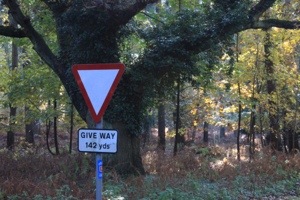
Unfortunately, Pauline wasn’t feeling 100% and decided to stay in the camper-van, so I left her behind and set out from our campsite a bit after 10am, to walk the two miles or so to the “big house”. By the way, there may be a lot more references to distances in yards and miles for the next while, as we’ve had to change GPS Karen to the old Imperial system of measurement, rather than metrics, as it’s just too hard in the UK to always be mentally converting the metric instructions (“after 800 metres, take the exit….”) and match them up against the corresponding road signs (“King’s Heath 1/2m”). And speaking of Karen, she came up with a beauty today as we drove across country from Norfolk towards Oxfordshire, by telling us to take the road to a place apparently called “Pe Turb Yer Oh”……we know it as “Peterborough”. And whilst I’m doing a Roly Scott-style digression on the thinnest of threads away from the main story, I saw an extremely precise road sign yesterday, informing me that there was a Give Way in 142 yards. Not 150, not even 140, not 100 or 200, but exactly 142 yards!

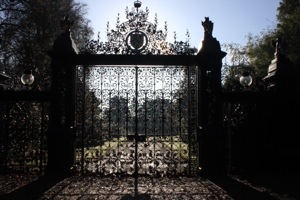
Anyway, back to what I was telling you. The “big house” is Sandringham House, the country house of the Royal Family, who have been coming here for holidays – especially at Christmas – since it was purchased in 1862 for £220,000 as a country home for the then Prince of Wales, later to become King Edward VII. The house is surrounded by 7,000 acres of gardens, forest, farm and parklands, including, in one corner near the B1439, a Caravan Club campsite. So when we say, from now on, that we stayed for a couple of nights at the Queen’s place, we won’t be entirely wrong, will we?

The place is really quite enchanting – the walk at first was along a woodland path where birds and squirrels were abundant, and a one stage on the path, I even saw a pheasant that has been smart enough, so far, not to be caught in the Duke of Edinburgh’s gunsights. Then, after a while, the path joins a lane which passes by two identical but mirror image gate lodges, one on either side of one of the entrances into the main part of the property. A bit further along, the lane becomes a road which leads to Park House which is signposted as “a unique hotel for people with disabilities” now run by the Leonard Cheshire organisation, but which was some 50 or so years ago the family home of the Spencer Family, and is therefore where the young Lady Diana Spencer spent her childhood. Across the road lies the visitor centre and associated tearooms and shop, adjacent to the only visitor gate into Sandringham itself. Sadly, because it is the off-season and also because preparations are now underway to ready the place for Her Majesty’s arrival for the holidays, the place has been closed to the public since the end of October.

Closure of the public gates unfortunately meant that access to the little Church was also unavailable, although of course it also meant there was no service there anyway. So, instead of perhaps joining a small congregation in the 16th Century Church of St Mary Magdalene and commemorating the day that way, I stood on my own nearby, beside the Estate’s own War Memorial. This is a simple stone cross, unveiled in 1919 by King George V, which lists the names of all those from the Sandringham area who died in WW1, many of them workers from the Estate itself. The amazing thing for me, was that as I looked up after my own private two minutes’ silence at 11am, I realised that everything had come to a halt around the immediate area…..there was a group of cyclists who’d dismounted behind me, a woman had silently stopped a few feet away from the Memorial as well, and across the road, all the cafe patrons who had been sitting outside on the terrace were standing, silently and respectfully. As I looked around as the two minutes ended, everyone just simply got on with what they had been doing, and life returned to normal….the cyclists continued their ride, the woman beside me smiled and walked away, the people at the cafe sat down and continued their drinks, and all across the park, people on the pathways resumed their walks. It was as good as being in a large crowd at a dawn service back home – a similar display of respect and commemoration, but in a completely spontaneous way.

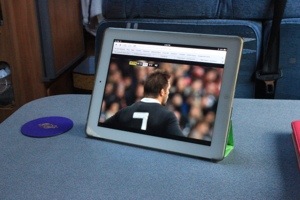
After that, I took a slightly longer walk home than I’d planned due to missing the side gate leading back to camp, then we spent the rest of the day inside watching the iPad screen….firstly to see the BBC’s Internet feed of the All Blacks vs Scotland from Murrayfield, then to watch a movie we’d been recommended by a number of you, “The Best Exotic Marigold Hotel”. And apart from the fact it was a very pleasant movie to watch, it also provides a neat wrap up to this story…..those of you who’ve seen it will remember that it is set in Jaipur, which of course is where we didn’t mark Anzac Day this year!

20121114-162157.jpg

20121114-163347.jpg

20121114-163408.jpg

20121114-163418.jpg

20121114-163414.jpg

20121114-163423.jpg