Two Banks in Europe

We’ve only told you snippets of the time we spent last month with Katrina and Bernard (i.e.”Two Banks” in case you thought this was about financial institutions)….back in August, Patricia got a whole blog post of her own after our four weeks together, so it’s only fair that our next visitors should have their 15 minutes of blog-fame as well. We had a fantastic time together and found that four people in a camper-van does work remarkably well…..everyone pitched in and got things done, and we all thoroughly enjoyed nearly three weeks with them both then another two weeks with just Katrina, after Bernard headed home for work as planned. In case you weren’t aware, this part of the trip was to mark the 50 years of friendship for Pauline and Katrina – an anniversary we’d been planning for, for a number of years.

In total, we managed to squeeze in visits to ten countries and covered a total of 5,798km in almost five weeks. [By the way, as of the day this blog entry is being written, we have now completed 30,051km since first setting off in our camper-van 23 weeks ago.] So, here’s a quick summary and a few highlights…..(K & B, please feel free to comment in order to add all the important things I’ve completely forgotten to mention!)

After picking our visitors up at 6.15am from Milan Airport in Italy, we headed a short distance north to a camp on the shores of Lake Maggiore and from there, the next day, went on a round trip to the beautiful Lake Como, popping in to Switzerland on the way back to camp. As you do. Then a couple of nights in Sestri Levante allowed us a day to visit the famous Cinque Terre, and although rock falls had closed the walking paths completely so we couldn’t walk between any of the five towns, the trains were still operating and we had a wonderful day soaking in the magnificent scenes, and soaking up the magnificent wines. We then headed south and called to see the Leaning Tower of Pisa on our way to Assisi (stayed the night there but really didn’t see much as it was a time of very heavy rain so we just pushed on), then onto Monte Cassino which we’ve already told you about, and finally across to the ferry port of Bari to catch an overnight boat to Croatia…..

….where we arrived to a perfect morning and had breakfast beside Dubrovnik harbour. Sadly, the good weather didn’t last and in fact turned to torrential rain that night which is when the awning came to the end of its useful life. But that didn’t stop us having a great visit to the old city and walking the entire length of the old city wall, taking in the fact that Dubrovnik really is a wonderful place despite much of the city having been rebuilt after being destroyed by the Serbs during the Balkans War in 1991. Then, on our way up the coast to Split (best campsite in Europe by far!) we had a very brief visit to Bosnia & Herzegovina…..brief because there’s just a 10.1km stretch of the otherwise Croatian highway which passes through another country! Time enough to stop and buy a fridge magnet, and to ask the shop assistant if we actually were in Bosnia (there are no road signs welcoming you that’s for sure!) only to rather curtly be answered “No, you’re in Herzegovina”. Oops, diplomatic faux pas there, I think!!

After a couple of days in Split, and then a stop at a cold, somewhat unwelcoming campsite near Karlovac we headed to Slovenia. Well, we tried to but after the GPS took us to the nearest road heading across the river border we met a Croatian Mr Plod whose sole job, it would seem, was to man the border post that wasn’t a border post. Not for us anyway – we had to turn around and head further along the red dotted line on our map in order to cross the same river on a different bridge carrying a more important highway which allowed us to successfully enter Slovenia and head to the capital Ljubljana. Just one night there, but highlighted by a trip into the city, a ride up to the Castle, then dinner in the Old Town at a delightful restaurant serving authentic local food and drinks. Next morning, we were up bright and early to go to Lake Bled which would have to be one of the most stunningly beautiful scenes we have ever seen, then through the unfortunately named Karawanken Tunnel and into Austria. Didn’t stop there though…..this was a three country day as we went quickly north and only stopped after 325km when we reached Berchtesgaden in Germany (a story also covered in a previous blog).

We then revisited Oberammergau (no mountain climbing or theatre visits this time but we did have another wonderful meal out thanks again to Katrina and Bernard’s generosity), crossed the next day back into Austria and through Liechtenstein, and then onto a camp site on a farm in Switzerland. We arrived in the dark but there was no doubting that this was a ‘farm camp’ – if the cow bells didn’t let you know, the cow smells certainly did. Across Switzerland the next day in the fog and drizzle, but we did manage to find Lausanne (where we visited the International Olympic Committee Museum – well, the temporary exhibition that is all there is for the next year or so whilst the main museum is closed for renovations!) and also our next stop Geneva.

We actually stayed across the border at Neydens in France, but caught the bus back to Geneva the next day for a look around, then on the following day just Bernard caught the bus as the first leg of his travels back to Wellington, whilst the other three of us turned the van’s nose south towards the French Riviera and Provence where we spent the next week or so. From here on, the trip log almost becomes a succession of shops visited because it is almost impossible to stop one woman from shopping let alone two women hunting as a pack. We did manage to squeeze in visits to places like the Casino in Monaco, the marina in Cannes, the Fragonard perfume factory in Grasse, markets in Gordes and Antibes, the Magnificent Palais des Papes in Avignon, one or two restaurants and wineries and again as you’ve already read, a few bridges as well.

After the last bridge, at Millau, we stayed a night on a Pâté de Foie Gras duck farm near Montignac and then visited the nearby site of the Lascaux Caves the next morning; we stayed in the Loire Valley and visited the most amazing 16th Century Château at Villandry with its even more amazing Renaissance Gardens including a kitchen garden like you’ve never seen before (quick quote from the guidebook: “made up of nine squares of equal size but with different geometric patterns in each, planted with vegetables of alternating colours (the blue of leeks, the red of cabbages and beetroot, the green of carrot tops) to create the illusion of a multi-coloured chess board”); and we stayed a night in Chartres which gave us time to spend in the very neat and tidy town itself, as well as time to visit its magnificent Cathedral.

And then, all too soon, we were back in Paris with just enough time for Katrina to pack, for one last meal out, and then for us to become just two again, after dropping her off at Charles De Gaulle Airport…..very sad to see them both go, but very happy that we had all enjoyed a brilliant time together and had seen some great sights and done some great things during that time.

Have a look at a few photos from the Balkans here and of parts of France here .

Remembrance Sunday

Sunday 11 November
Sandringham Estate, Norfolk, England

A very crisp frosty morning but one of those ones where you don’t mind the cold, because the day that ensues is a glorious bright blue-skied sunny one. At least until 4.30pm that is, by which time it is pitch black again, with nightfall coming very early in this part of the world at this time of year. But a crisp frosty morning isn’t really a problem when it’s Remembrance Sunday – because of course the events of the day are centred around 11am, rather than dawn as those of us from the Antipodes are more accustomed to when it’s Anzac Day. And as we’d missed Anzac Day this year (oddly, it hadn’t seemed to attract much attention where we were at the time, in Jaipur in India), we wanted to make an effort to mark Remembrance Sunday instead. Also, this year the date was a bit special because the second Sunday in November, which is when Remembrance Sunday falls, coincided with Armistice Day itself – the next time that will happen will be 2018, the 100th Anniversary of the end of World War One.

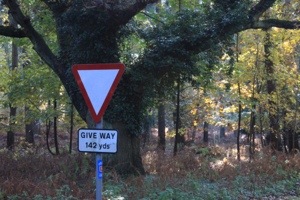
Unfortunately, Pauline wasn’t feeling 100% and decided to stay in the camper-van, so I left her behind and set out from our campsite a bit after 10am, to walk the two miles or so to the “big house”. By the way, there may be a lot more references to distances in yards and miles for the next while, as we’ve had to change GPS Karen to the old Imperial system of measurement, rather than metrics, as it’s just too hard in the UK to always be mentally converting the metric instructions (“after 800 metres, take the exit….”) and match them up against the corresponding road signs (“King’s Heath 1/2m”). And speaking of Karen, she came up with a beauty today as we drove across country from Norfolk towards Oxfordshire, by telling us to take the road to a place apparently called “Pe Turb Yer Oh”……we know it as “Peterborough”. And whilst I’m doing a Roly Scott-style digression on the thinnest of threads away from the main story, I saw an extremely precise road sign yesterday, informing me that there was a Give Way in 142 yards. Not 150, not even 140, not 100 or 200, but exactly 142 yards!

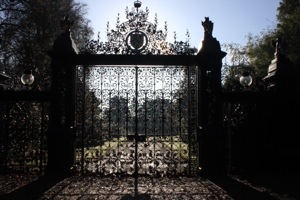
Anyway, back to what I was telling you. The “big house” is Sandringham House, the country house of the Royal Family, who have been coming here for holidays – especially at Christmas – since it was purchased in 1862 for £220,000 as a country home for the then Prince of Wales, later to become King Edward VII. The house is surrounded by 7,000 acres of gardens, forest, farm and parklands, including, in one corner near the B1439, a Caravan Club campsite. So when we say, from now on, that we stayed for a couple of nights at the Queen’s place, we won’t be entirely wrong, will we?

The place is really quite enchanting – the walk at first was along a woodland path where birds and squirrels were abundant, and a one stage on the path, I even saw a pheasant that has been smart enough, so far, not to be caught in the Duke of Edinburgh’s gunsights. Then, after a while, the path joins a lane which passes by two identical but mirror image gate lodges, one on either side of one of the entrances into the main part of the property. A bit further along, the lane becomes a road which leads to Park House which is signposted as “a unique hotel for people with disabilities” now run by the Leonard Cheshire organisation, but which was some 50 or so years ago the family home of the Spencer Family, and is therefore where the young Lady Diana Spencer spent her childhood. Across the road lies the visitor centre and associated tearooms and shop, adjacent to the only visitor gate into Sandringham itself. Sadly, because it is the off-season and also because preparations are now underway to ready the place for Her Majesty’s arrival for the holidays, the place has been closed to the public since the end of October.

Closure of the public gates unfortunately meant that access to the little Church was also unavailable, although of course it also meant there was no service there anyway. So, instead of perhaps joining a small congregation in the 16th Century Church of St Mary Magdalene and commemorating the day that way, I stood on my own nearby, beside the Estate’s own War Memorial. This is a simple stone cross, unveiled in 1919 by King George V, which lists the names of all those from the Sandringham area who died in WW1, many of them workers from the Estate itself. The amazing thing for me, was that as I looked up after my own private two minutes’ silence at 11am, I realised that everything had come to a halt around the immediate area…..there was a group of cyclists who’d dismounted behind me, a woman had silently stopped a few feet away from the Memorial as well, and across the road, all the cafe patrons who had been sitting outside on the terrace were standing, silently and respectfully. As I looked around as the two minutes ended, everyone just simply got on with what they had been doing, and life returned to normal….the cyclists continued their ride, the woman beside me smiled and walked away, the people at the cafe sat down and continued their drinks, and all across the park, people on the pathways resumed their walks. It was as good as being in a large crowd at a dawn service back home – a similar display of respect and commemoration, but in a completely spontaneous way.

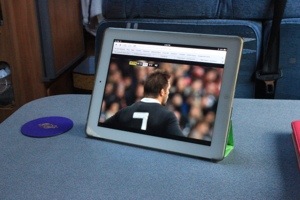
After that, I took a slightly longer walk home than I’d planned due to missing the side gate leading back to camp, then we spent the rest of the day inside watching the iPad screen….firstly to see the BBC’s Internet feed of the All Blacks vs Scotland from Murrayfield, then to watch a movie we’d been recommended by a number of you, “The Best Exotic Marigold Hotel”. And apart from the fact it was a very pleasant movie to watch, it also provides a neat wrap up to this story…..those of you who’ve seen it will remember that it is set in Jaipur, which of course is where we didn’t mark Anzac Day this year!

20121114-162157.jpg

20121114-163347.jpg

20121114-163408.jpg

20121114-163418.jpg

20121114-163414.jpg

20121114-163423.jpg

Four Bridges in Four Days

Something that the South of France has in abundance, apart from olives, grapes, lavender and film stars, is bridges. Yes, bridges! We won’t list them all, but here’s a few notes about the four rather special ones we visited along with Katrina recently…..

Tuesday – Pont Julien
This was one we’d visited with Lawren back in 1998 but a month or so ago when we were in this area with Patricia, we couldn’t find it! However, this latest time we located it straight away. The Pont Julien is near Lacoste in the part of Provence made famous by Peter Mayle in his books, and it’s been there for over 2000 years. In 1998 we drove over it, in a car obviously, but following in the wheel tracks of the Romans who’d built it in 3 BC to use it in their chariots. It turns out now though that the local authorities decided in 2005 to build a new bridge alongside in order to preserve the old one, so our plan to drive a camping car over a Roman bridge was thwarted! We walked over it instead – but it’s quite fantastic to think that this was a bridge that was in daily road use for 2008 years…..one of those things that New Zealanders find a little hard to comprehend at times!

Wednesday – Pont d’Avignon
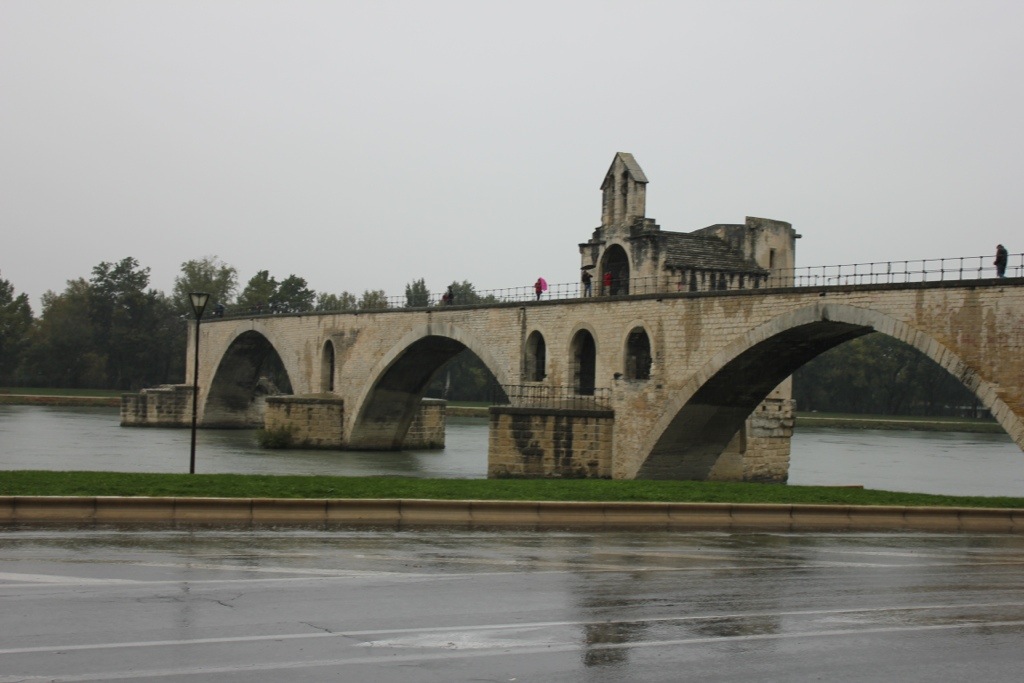
Funnily enough, despite the fame generated through the well known song, this is not the real name of this medieval bridge – it is actually officially known as Pont St Bénezet, named after the local shepherd boy (later canonised) who was told by an angel, according to the legend, to build the original bridge. And while we’re dispelling myths, the song may well mention dancing on the bridge as in “sur le Pont d’Avignon”, but it was originally “sous le Pont” meaning under, because the dances were traditionally held on an island in the middle of the Rhone where the bridge passed over.
Anyway, we certainly didn’t dance on or under or even anywhere near this bridge, because it was absolutely pouring with rain and blowing a gale, so even to walk out on it was a pretty impressive effort. It’s only 4 spans long these days so the walk wasn’t that far…..not nearly as far as it would have been back in 1185 when it was first completed as a 900m long bridge of 22 spans. That’s the thing that is most impressive – that back in the 12th Century they had enough skill to build a bridge that long over such a major river. Mind you, perhaps they weren’t that good because it suffered badly in the frequent floods and often had to be repaired, so became more and more patched, until in 1668 it was finally almost completely destroyed by a catastrophic flood and was taken out of commission. Because they stopped bothering to try and repair it after that, bit by bit the remaining parts of the bridge fell down, until there were only the current four spans left. And that’s how it stands today – a legendary bridge, but one that leads to nowhere!

Thursday – Pont du Gard
This one is another bridge that leads to nowhere….not today anyway. When it was built in the 1st Century AD, again by the Romans, it was part of a 50km long aqueduct system that carried water to the city of Nîmes. Interestingly enough, the word is that the citizens of Nîmes didn’t really need the 44 million gallons of water that the aqueduct delivered to them every day – they had plenty already, and the extra water simply enabled them to waste it in luxurious living with running water in every home, flushing toilets, swimming pools etc – the good life Roman style!
Even although by the 6th Century the water system had largely ceased to function, the Pont du Gard still operated as a very important (and lucrative) toll bridge for over 1000 years, and today it is probably just as lucrative as a tourist attraction. The day we were there, the car park was at least half full (which is a lot of cars and camper vans) and there were visitors everywhere, despite the fact we are now very much in the low season. And no wonder – it is indeed a sight to behold, as it is a very impressive piece of engineering. Imagine the skills involved nearly 2000 years ago, to build a bridge structure that contains over 50000 tonnes of limestone, some of the blocks weighing over 6 tonnes each – and it is built almost entirely without mortar! The quarrying and preparation was so precise that the blocks fit together mostly by friction and gravity alone – quite amazing really when you consider the overall size of the bridge at 49m high and 275m long. And one more engineering fact – the surveying was so precise, to ensure the water could flow evenly along the full 50km length of the aqueduct, that the fall across the Pont du Gard itself is only 2.5cm, which is a gradient of 1 in 3000! That’s impressive….

Friday – Viaduc de Millau
Even the Romans couldn’t have dreamt this one up! About 15 years ago, the French government decided that it was time to end the huge traffic jams that occurred around the Millau area every day during summer, and commissioned studies into an alternative route. Several options were considered with the final result being the incredible structure that now crosses the entire Tarn Valley, almost over the top of Millau and the now no-longer jammed roads below. It’s the world’s highest multi-stayed viaduct, with a steel deck and 7 concrete piers the highest of which is 343m. It’s nearly 2.5km long, and cost €400m. When it was under construction, which only took 3 years to the day incidentally, the crane operator working on the highest pier was in a cab 255m above the ground, which is the equivalent of a 76 storey building. And yet, despite these superlatives and even with all the modern engineering techniques and the complex computer modelling and analysis involved, guess what they used to ensure the pylons holding the suspension stays were vertical? A humble plumb-bob obtainable at the nearest hardware shop for a couple of euro!

With an average age of almost 1500 years, each of these structures is an engineering marvel of its day, and each is also now a significant tourist attraction. What a privilege it was to be in this part of the world in the first place of course, but also to be lucky enough to see these four special bridges over four special days…..

20121109-201153.jpg

20121109-201255.jpg

20121109-201305.jpg

20121109-201246.jpg

A couple of highs….

Well, we’re back into the blog posts now….there’s one coming on some bridges in the South of France, and it’s probable that there will be another one soon about our week or so in three parts of what used to be Yugoslavia (Croatia, Bosnia & Herzegovina, and Slovenia) because we enjoyed every minute of our time there (except for the one time – at 3.15am – when the torrential rain in Dubrovnik collapsed our awning, thus damaging it to the point where it will not work again without some fairly major repairs!). However, before all that, we want to tell you about a couple of mountains in Europe that are now special chapters in our book of travels.

By the way, this doesn’t include any peaks in Switzerland, because we could be forgiven for believing that there aren’t really any at all! Apart from the first afternoon there, as we travelled from a second visit to Vaduz in Liechtenstein to our campsite located halfway between Zürich and Luzern, when we were driving along a valley flanked by quite high ranges, the rest of our time in Switzerland was spent in low fog and mist behind which there may have been mountains…..who would know?

A few blog posts ago, we told you about our big effort in climbing Mount Kofel (1342m) above the village of Oberammergau in Germany. In the last two weeks, in our travels with Katrina and Bernard, we now have two more peaks to add to the list – Montecassino in Italy, and Kehlstein in Germany. Very different in height, very different in use, and each having occupants over the years who couldn’t be further apart in character if they tried, but both great places to visit.

We visited Cassino to firstly see the War Cemetery there, at the foot of the mountain and quite near the town. Andrew had been there in 1980 and remembered it as being a very peaceful place, where the memory of the several thousand Allied soldiers, including 400 or so Kiwis, is still held very dear by the eternally grateful local Italians. Well, in the ensuing 30+ years, the town and its industry have grown around the cemetery so the surrounding area is a lot busier now, but the graves themselves still sit peacefully under the trees and remain an oasis of memories. After a good visit there, we headed into town where a policeman with just “a leetle bit of Inglese!” assured us that it was no problem to take the camping car up the winding road to the Abbey at the top of the hill, but that we would not be allowed to camp overnight. That was OK with us we only intended to make a brief visit, then head on to a camp on the way to our next destination which was the ferry port of Bari.

So off up the hill – a 9.5km drive that probably covers only about 500m as the crow flies, from the town at just 40 metres above sea level, to the Abbey car park at 517m a.s.l., and on a very good road! In Italy, this is quite surprising because most highways and byways, apart from the toll roads, range from poor at best to absolutely dreadful. And when we got to the top, another surprise was in store….the old guy who took our €8 for parking informed us, quite unprompted, that we were most welcome to stay the night in the car park so we decided to accept this offer. First of all though we visited the Abbey itself – a pretty incredible building which has been there in one form or another since St Benedict founded it in the 5th Century AD and which has been destroyed and rebuilt so many times. Most recently it was reduced to rubble in the Battle of Monte Cassino in the first few months of 1944 – this battle of course being the reason for the cemetery down below – but then it was fully rebuilt within a few years after WW2 ended. It’s still a fully functional Benedictine monastery and in fact we were in the church itself when evening prayers were being sung which was a pleasant surprise. And then, next morning after a very peaceful night’s sleep under the walls of the Abbey, we were all still sound asleep when morning prayers began. And how do they wake the monks? (and also the heathens in the car park?)….by ringing the incredibly deep toned and resonant Abbey bells for a full 10 minutes starting at 5am….and again at 5.30am, and then again, just in case any young novice has pulled the blankets even tighter around his ears, at 6am! Despite what you may think though, it was actually a really good experience – not many people like us would have stayed the night “up the hill” anyway, let alone had the experience of lying there, listening to the bells toll out across the surrounding countryside. Unique…and memorable. The other thing that made the stay even more memorable, was to look out the windows to find ourselves well above a thick and all-enveloping layer of cloud which obscured absolutely everything bar the Abbey itself and maybe the top 50m of the Monte. We certainly felt like there was no-one in the world bar just us four, a handful of monks, and maybe God himself, on top of a pretty special peak.

Then, to see another famous peak but one at the far distant end of the spiritual scale, a couple of weeks later we camped in the town of Berchtesgaden, in the Bavarian Alps. It is a typical German Alpine town, where all the houses have shuttered windows with flower boxes full of geraniums, and all the occupants (well, many of them anyway) wear dirndls or lederhosen. But unlike most German Alpine towns, this one has a very close link to the Führer himself, as Berchtesgaden sits underneath a peak named the Höher Goll, which has Kehlstein as a sub-peak – this is where the infamous Kehlsteinhaus or Eagle’s Nest as we know it in English can be found. The town is at around 700m a.s.l., and after a short drive to a car park beyond which no private vehicles have been allowed since 1952, we boarded a bus which then became part of a convoy of 4 or 5 others which travelled 6.5km up another very good road at surprising speed as we climbed to almost 1700m a.s.l. The buses are on a very strict timetable because the road is one way for its entire length all but a passing bay at the halfway point where the downhill buses wait for the uphill convoy. Once we reached the top bus park, we achieved the next 124 metres of vertical climb in a very highly polished brass lift which takes you from a tunnel bored into the mountain, and up into the Eagle’s Nest building itself. And we were told that whilst we have to walk the length of the tunnel these days, Hitler used to be driven to the lift door….nice for some!

The Eagle’s Nest itself now houses a bar and a restaurant and to be honest is a somewhat unremarkable building in design terms – if it had been built on a normal building platform. However, given that it, and the road leading to it, were completed in just 13 months as a 50th birthday gift for Adolf in 1938, and that of course the site is nearly 6000ft up in the mountains, the unremarkable becomes worth noting! What is truly worth the climb though, and we were lucky with a clear sunny and mild autumn day, is the view down over Berchtesgaden and Konigsee, and across the valley into Austria where Salzburg was clearly visible. You can see a very long way from the Eagle’s Nest, and the view is magnificent. Check it out, along with a few other photos, in the attached album here.

Two entirely different peaks, but definitely two highs on our travels to date…..

List of Things We Don’t Like About France…..

OK, so the real purpose of this post is to let you know that we are alive and well! We know it’s been ages since the last blog post but that’s because we’ve been having far too good a time to sit around writing stories on an iPad!!

We have been travelling with Katrina and Bernard, our good friends from Wellington, and have had a wonderful time together since picking them up four weeks ago at Milan Airport. Since then, we’ve travelled through parts of Italy including the lakes in the north and the Cinque Terre, across the Adriatic to Croatia where we really enjoyed Dubrovnik and Split in particular, up through Slovenia and Austria to Germany, then onto Switzerland for a few days. Then, last week we farewelled Bernard in Geneva as he had to get back to NZ for work but Katrina is still with us “on tour” – we have had a great few days showing her some of our favourite areas in the South of France. We’ll drop Katrina off in Paris on Wednesday, and at 8am the next morning we catch a EuroShuttle and leave the Continent ourselves to head back to the UK after almost 5 months on this side of the Channel.

So, yes, we are fine and we are still enjoying ourselves very much. There’s a few blog posts in various stages of completion because we have so much to share, but for now, let’s just share the list of the things we can’t stand about the country we have now been in six times this trip, for a total stay that will amount to more than 7 weeks by the time we finally leave.

Here’s the full list of “List of Things We Don’t Like About France…..”
1. nothing

We’ll be back as soon as possible with stories about bells, Bosnia, and bridges among other things. TTFN.